
Home> Industry News> Solar Powered Bus Shelters: The Sustainable Solution for Off-Grid Locations

Solar Powered Bus Shelters: The Sustainable Solution for Off-Grid Locations

2025,12,19
In my years of consulting for global transit projects, one of the most frequent challenges I hear from city planners is the "last-mile power gap." Connecting a bus stop to the main power grid can be prohibitively expensive, especially in suburban areas or sprawling coastal cities.
 
This is where the Solar Bus Shelter shifts from being an "eco-friendly option" to a "financial necessity." Today, I’ll walk you through how our Solar Bus Shelter is bridging this gap.
 
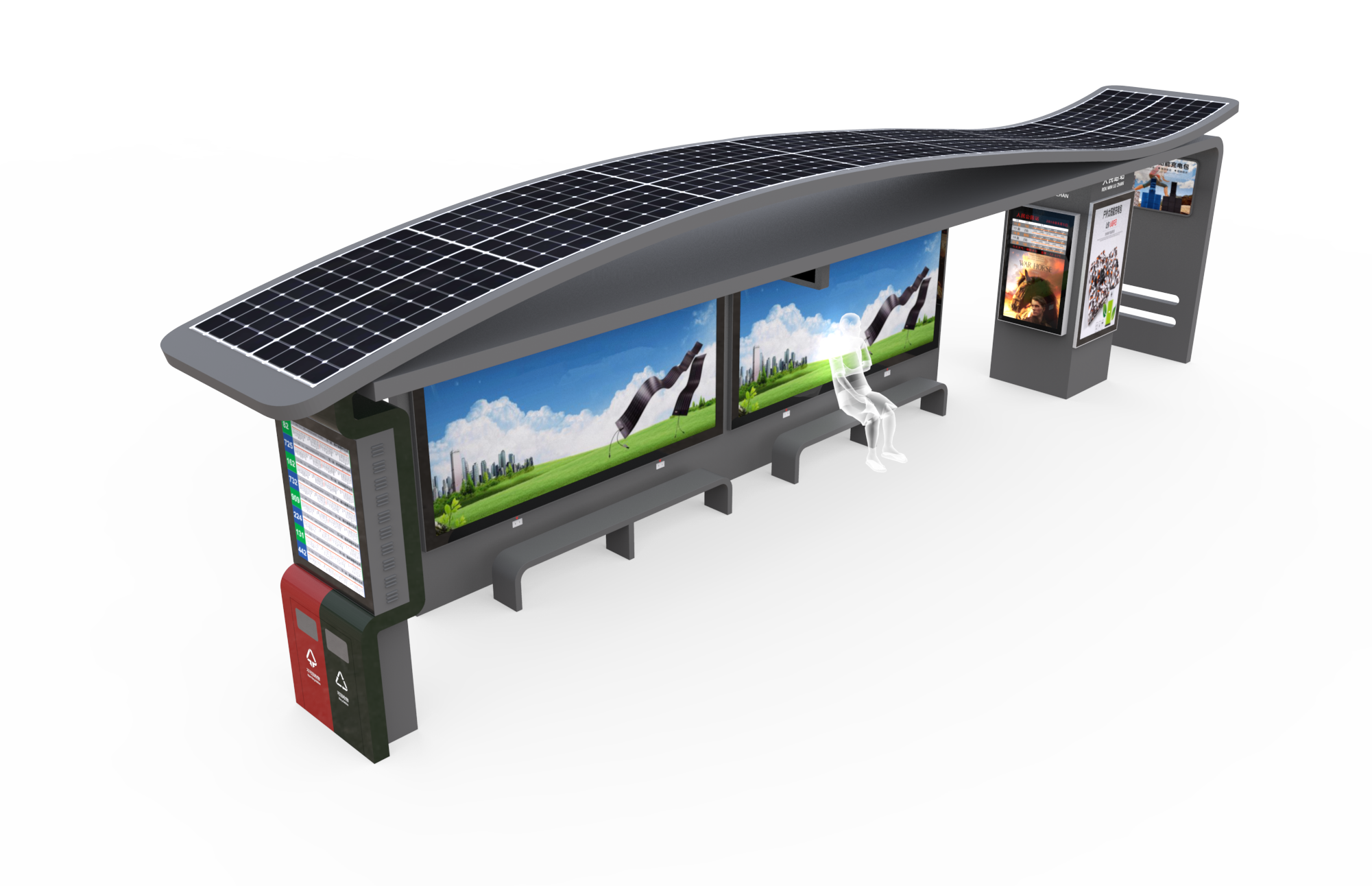
Solar Powered Transit Shelter
 
Harnessing Clean Energy for Public Transport
A Sustainable Street Furniture strategy isn't just about reducing carbon footprints; it’s about operational independence. By integrating high-efficiency photovoltaic (PV) panels into the roof of a 13-meter structure, we transform a simple shelter into a self-sustaining power plant.
 
For the Transit Shelter Supplier, solar integration means you can install a fully functional, lighted station in a single day, without digging up roads to lay electrical cables.
 
Technical Specifications for Solar Integration
Designing a Solar Powered Transit Shelter requires more than just slapping a panel on top. It’s an exercise in energy budgeting. Our Solar Bus Shelter is engineered to balance energy intake with the demands of 55-inch LCD screens and LED lighting.
 
1. High-Efficiency PV Panels
We utilize monocrystalline silicon panels that offer high conversion rates even in low-light conditions. These are seamlessly integrated into the roof to maintain the Modern Bus Shelter Design aesthetics.
 
2. Intelligent Battery Storage & Endurance
The energy is stored in specialized lithium iron phosphate (LiFePO4) batteries.
 
Capacity: Designed to power LED lighting and basic smart functions for 3–5 rainy days.
 
Durability: Rated for extreme temperatures, ensuring the Passenger Shelter remains lit and safe regardless of the season.
 
Solar vs. Grid-Powered Shelters: A Cost-Benefit Analysis
 
Metric Grid-Powered Shelter Solar-Ready Shelter
Installation Cost High (Trenching + Wiring) Low (Plug-and-play)
Energy Bill Ongoing Monthly Expense Zero (Renewable)
Reliability Susceptible to Grid Outages Independent / Off-grid
Environmental Impact Carbon-dependent Carbon-neutral
Maintenance Low (Electrical checks) Low (Panel cleaning)
 
Reducing Carbon Footprint in Municipal Projects
As a Bus Shelter Manufacturer, we’ve seen a massive surge in "Green Tenders" from Europe and North America. Municipalities are now required to meet strict sustainability quotas.
 
By choosing a solar-powered solution, cities can:
 
Achieve Carbon Neutrality Goals: Every solar shelter reduces CO2 emissions by hundreds of kilograms annually.
 
Enhance Public Safety: Ensuring that even the most remote bus stops are well-lit at night using stored solar energy, significantly increasing Anti-vandal security.
 
Conclusion: The Sun as Your Power Grid
The future of Bus Stop Infrastructure is undeniably green. Whether you are looking to save on infrastructure costs or meet environmental mandates, the Solar Bus Shelter provides a robust, 13-meter platform that works for the planet and your budget.
 
Are you working on a project in a remote location or an eco-park? Contact me today for a custom solar energy calculation based on your local sunlight hours.
Contact Us

Author:

Ms. Li

Phone/WhatsApp:

+86 15986817332

Popular Products
You may also like
Related Categories

Email to this supplier

Subject:
Mobile:
Email:
Message:

Your message must be between 20-8000 characters

Copyright © 2026 Ningbo Toncom Municipal Facility Technology Co., Ltd. All rights reserved. Privacy Policy

We will contact you immediately

Fill in more information so that we can get in touch with you faster

Privacy statement: Your privacy is very important to Us. Our company promises not to disclose your personal information to any external company with out your explicit permission.

Send