Home> Industry News> How to Choose the Right Bus Shelter for Your City: A Complete Guide to Modern Public Transit

How to Choose the Right Bus Shelter for Your City: A Complete Guide to Modern Public Transit

2026,07,20
INTRODUCTION
 
Urban public transportation is the backbone of modern cities. As cities around the world expand, the demand for reliable, durable, and intelligent transit infrastructure has never been higher. Among all transit assets, the Bus Shelter is perhaps the most visible and most heavily used piece of street furniture in any city. Yet, despite its importance, many municipalities still rely on outdated, poorly designed, or cheaply manufactured shelters that fail to serve passengers well.
 
This guide is designed for city planners, municipal procurement officers, transit authority engineers, and infrastructure developers who are evaluating options for upgrading or expanding their bus shelter networks. We will walk you through every major consideration, from design philosophy and material selection to smart technology integration and long-term maintenance planning.
 
TONCOM has been manufacturing and deploying bus shelters since 2009, with over 210,000 units implemented across more than 170 cities worldwide. Our experience spans from small rural transit stops to large-scale BRT (Bus Rapid Transit) corridor installations in major metropolitan areas. This guide draws on that institutional knowledge to give you practical, actionable guidance.
 
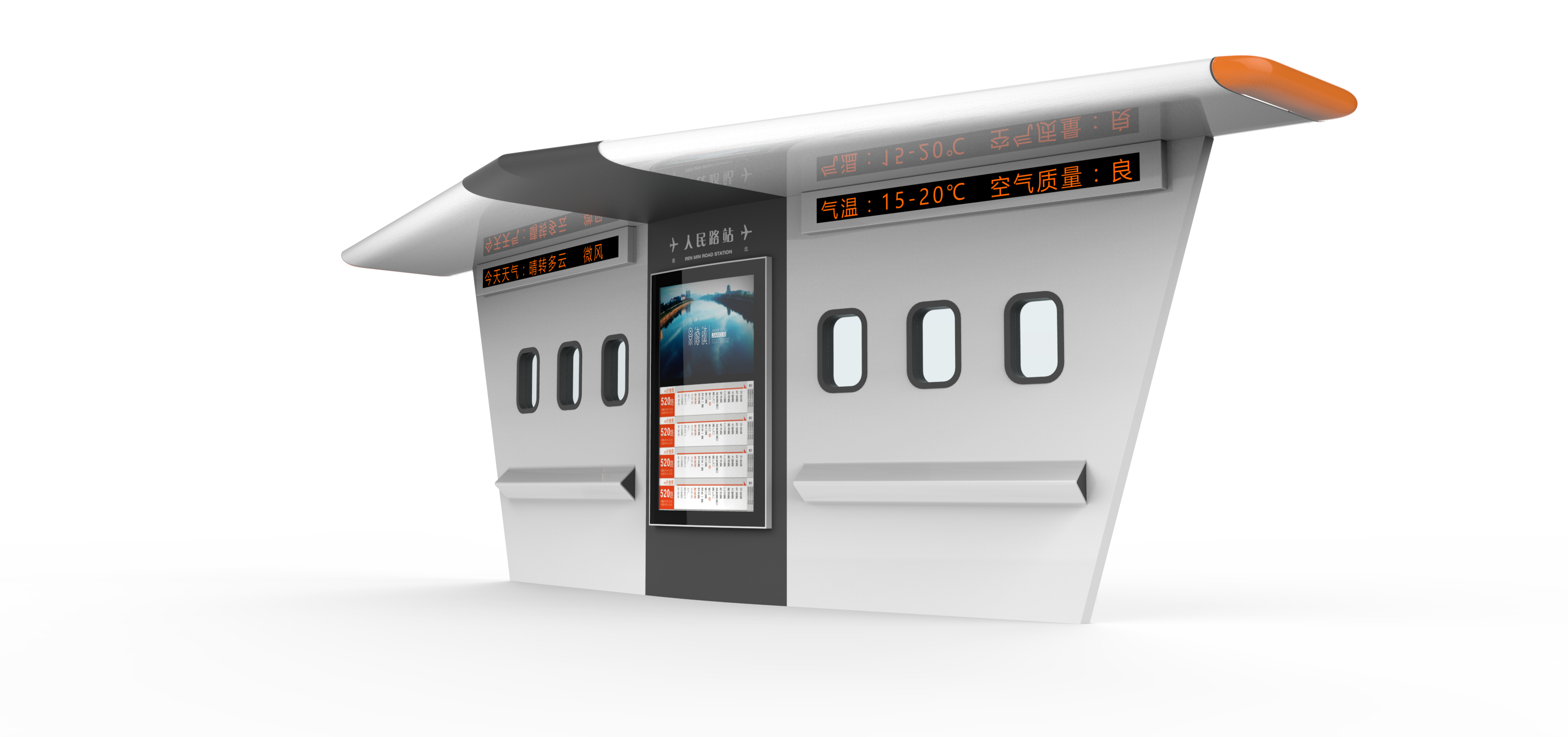
THC-244
 
PART ONE: UNDERSTANDING THE ROLE OF THE BUS SHELTER IN URBAN TRANSIT
 
A bus shelter is far more than a roof and a bench. It is a critical interface between the transit system and the passenger. A well-designed shelter communicates the identity of the city, provides safety and comfort, and increasingly serves as a platform for smart city services.
 
From a transportation planning perspective, quality bus shelters can measurably increase ridership. Studies in various cities have shown that providing adequate weather protection and Seating at bus stops can increase average ridership by 10 to 25 percent. When shelters are also equipped with real-time information displays and payment systems, the increase can be even higher.
 
From an urban design perspective, bus shelters anchor the street environment. They signal to residents and visitors that a city invests in its public spaces and values the experience of people who choose public transit. Cities with attractive, well-maintained shelters tend to rate higher on livability indices and attract more commercial investment in surrounding areas.
 
From a sustainability perspective, bus shelters represent a significant opportunity. Solar-powered lighting, recycled material construction, green roofs, and EV charging integration can all be incorporated into shelter design, helping cities meet their carbon reduction commitments while delivering improved passenger services.
 
PART TWO: KEY DESIGN PRINCIPLES FOR MODERN BUS SHELTERS
 
When evaluating a custom bus shelter manufacturer for smart cities, decision-makers should look for suppliers who understand and apply the following core design principles.
 
2.1 Passenger-First Design
Everything in a good shelter design starts with the passenger experience. How many people typically use the stop? What is the average wait time? What is the weather like in that climate zone? Are there significant numbers of elderly, disabled, or mobility-impaired users?
These questions shape fundamental decisions about canopy size, seating configuration, accessibility features, and weather protection. A shelter in a tropical climate needs exceptional ventilation and rain protection but minimal heating provisions. A shelter in a northern European or Canadian climate needs robust wind barriers, heated seating options, and strong snow load structural capacity.
Accessibility is non-negotiable in modern bus shelter design. This means level boarding areas, tactile guidance for visually impaired passengers, adequate turning radius for wheelchair users inside the shelter, and appropriate counter heights for information Kiosks if included.
 
2.2 Structural Engineering and Load Considerations
Bus shelters are permanent outdoor structures exposed to all weather conditions. The structural engineering must account for wind loads, snow and ice loads, seismic loads in earthquake-prone areas, and impact resistance for high-traffic locations where vehicle collision is a risk.
The modular bus stop design for high traffic areas requires especially careful attention to structural robustness. High-traffic stops in city centers can see hundreds of passengers per hour, creating significant wear on all components. Structural frames must be designed with appropriate safety factors, and all connection details must allow for thermal expansion and contraction without causing stress concentrations that lead to fatigue failure.
Steel is the most common primary structural material because of its combination of strength, weldability, and recyclability. Hot-dip galvanized steel provides corrosion resistance suitable for most environments. In coastal or highly industrial environments, stainless steel or aluminum alloy frames may be more appropriate despite their higher initial cost.
 
 
THC-187
2.3 Material Selection and Finish Quality
The visible components of a bus shelter — roof panels, cladding, signage elements, and seating — must balance aesthetics, durability, and maintenance practicality.
Tempered or laminated safety glass is widely used for shelter walls and roofs because it provides transparency that maintains sightlines and creates an open, non-threatening environment, while offering acceptable weather protection. Polycarbonate panels are lighter and more impact-resistant but can yellow with UV exposure over time and may require periodic replacement.
Powder-coated steel and aluminum profiles offer excellent color consistency and corrosion resistance for structural and decorative elements. Powder coating is available in virtually any RAL color, allowing shelters to be matched to city brand colors or to complement the surrounding architectural environment.
Flooring should be slip-resistant even when wet, and should allow drainage to prevent water pooling. Textured concrete, non-slip tiles, or purpose-designed rubber matting are all viable options depending on the project budget and context.
 
PART THREE: SMART TECHNOLOGY INTEGRATION
 
One of the most significant trends in bus shelter design over the past decade has been the integration of smart technology. When specifying a weather resistant bus shelter with solar panel integration, procurement teams should understand the full range of technology options available.
 
3.1 Real-Time Passenger Information Systems
Electronic displays showing real-time vehicle arrival information are now considered a basic requirement for quality urban transit shelters. These can range from simple LED ticker displays showing next vehicle arrival times, to full-color touchscreen panels offering route maps, network information, journey planning tools, and advertising content.
The communication infrastructure for these systems can be based on cellular (4G/5G) connectivity, fiber optic connection to the city's existing network, or low-power mesh radio networks purpose-built for transit applications. Each option has different cost implications and performance characteristics.
Content management systems (CMS) allow transit authorities to update information centrally across their entire network, push emergency notifications to all displays simultaneously, and manage advertising content to generate revenue that can offset operational costs.
 
3.2 Solar Power Systems
Solar panel integration is increasingly standard in quality bus shelter installations, particularly for off-grid locations where bringing mains power to every stop would be prohibitively expensive.
A properly engineered solar shelter system includes photovoltaic panels mounted on or integrated into the canopy structure, a battery storage system sized to provide power through cloudy periods and nighttime hours, a charge controller and power management system, and a monitoring system allowing operators to track system performance remotely.
The power budget must account for all electrical loads: display panels, lighting, sensors, communication devices, and any auxiliary systems like heated seating elements or USB charging points. In most climates with reasonable solar resources, a well-designed system can provide reliable power year-round with minimal maintenance requirements.
 
3.3 Surveillance and Safety Systems
Passenger safety is a critical concern, particularly at stops used during early morning and late evening hours. CCTV cameras can be integrated into shelter structures, with footage transmitted to a central monitoring station. Emergency call buttons connected to transit authority or police control rooms provide an additional layer of security.
Lighting design is also a safety-critical element. Shelters should be well-illuminated internally, and should also provide spillover lighting to the surrounding boarding area. LED lighting with automatic dusk-to-dawn control and optional dimming functions provides energy efficiency while maintaining safety standards.
 
3.4 Environmental Monitoring and Smart City Integration
As cities develop their smart city platforms, bus shelters are increasingly viewed as distributed sensor nodes in the urban IoT network. Air quality sensors, weather stations, pedestrian counting systems, and noise monitoring equipment can all be hosted within shelter structures, contributing data to city-wide environmental monitoring and planning systems.
This integration of transit infrastructure with broader smart city platforms represents one of the most exciting areas of development in the field. TONCOM's intelligent transit systems are designed with open communication protocols that allow integration with a wide range of smart city platforms, both proprietary and open-source.
 
CONCLUSION
 
Selecting and deploying quality bus shelter infrastructure is a significant investment that pays dividends in improved passenger experience, increased transit ridership, and enhanced urban quality. The key to success is thorough needs analysis, careful product specification, rigorous supplier evaluation, and professional installation and maintenance.
TONCOM has the experience, manufacturing capability, and engineering expertise to support transit authorities and municipalities at every stage of this process. Our team can assist with needs analysis, design customization, technical specification development, installation supervision, and long-term maintenance support.
We invite procurement teams, project managers, and urban planners to contact us to discuss how TONCOM's bus shelter solutions can serve your city's needs. Our global track record across 170-plus cities and our portfolio of over 210,000 deployed units speaks to our capability and commitment to quality.
Whether you are specifying a single replacement shelter for a suburban route or planning a comprehensive network upgrade across your city, TONCOM has the products, the people, and the experience to deliver.
 
Contact Us

Author:

Ms. Li

Phone/WhatsApp:

+86 15986817332

Popular Products
You may also like
Related Categories

Email to this supplier

Subject:
Mobile:
Email:
Message:

Your message must be between 20-8000 characters

Copyright © 2026 Ningbo Toncom Municipal Facility Technology Co., Ltd. All rights reserved. Privacy Policy

We will contact you immediately

Fill in more information so that we can get in touch with you faster

Privacy statement: Your privacy is very important to Us. Our company promises not to disclose your personal information to any external company with out your explicit permission.

Send